Holly Gibney
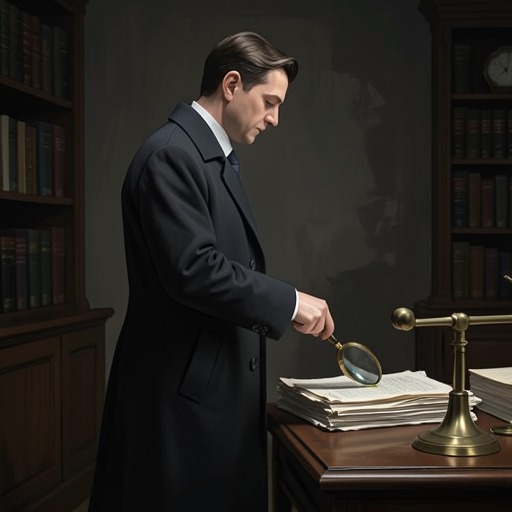
The Outsider (Stephen King Edition)Holly Gibney is a private investigator whose methodical work in Dayton turns a remote lead into a bridge between apparently separate murder cases. Recruited by Alec Pelley to continue an investigation Bill Hodges could not take on, she connects the Dayton evidence to Terry Maitland, Heath Holmes, and Claude Bolton, then helps Ralph Anderson accept that the evidence points beyond an ordinary explanation. Her role culminates in the confrontation with the Outsider, where tools drawn from the investigation and from her past working relationship with Hodges become decisive.
Identity and Background
Holly works at Finders Keepers, an investigative business whose routine assignments include pursuing bail-jumpers, tracing missing persons, and recovering property. She is careful about the limits of her professional credentials: when introduced to the Flint City group, she clarifies that her partner, Peter Huntley, holds the private-investigator license. The company does occasional criminal investigations, but Holly describes its everyday work modestly, including its record of finding missing pets. In the meeting, she feels embarrassed by how inadequate that description sounds beside the scale of the case.
Alec first reaches Holly after discovering that the number he had for the business was disconnected and consulting an old black address book for another. Their conversation begins with condolences for Hodges, whose death leaves the proposed investigation without the person Alec had hoped to hire. Holly says the business is doing well, but that she would give it up to have Hodges alive and healthy. Alec asks whether she might investigate in his place, explaining that his interest lies in Ohio and that he cannot leave the matters occupying him at home. Dayton is the practical destination that brings her into the case.
Hodges’s death has narrowed Holly’s ordinary life. She recalls that she has not felt genuinely excited since his death, and that pursuing Brady Hartsfield and Morris Bellamy had made her feel more alive than routine investigative work. Her pulse rises after Alec’s account of the Maitland affair captures her attention. The episode brings together her grief for her former partner and her continuing appetite for difficult cases: the investigation matters not simply as employment but because it reawakens a kind of engagement she has missed.
The Dayton Investigation
In Dayton, Holly builds her inquiry from dates, interviews, and the practical sequence of events. She plans to visit the Heisman Memory Unit and speak with Terry Maitland’s father if his condition allows, while also considering whether staff might provide useful information. In a report to Alec, she records that Tommy and Tuppence menus were distributed in a nine-block area on Thursday, April 19. Based on her interview with co-owner Mary Hollister, she considers the date reliable and reasons that Merlin Cassidy abandoned the van in a nearby parking lot then. She notes that the Maitland family arrived in Dayton around noon on April 21, and that the van was probably already gone. Her next step is to check with local police before pursuing the care-unit lead.
Holly’s work also identifies how the investigations have failed to connect. The Dayton police do not know about Frank Peterson’s murder, and Flint City police do not know about the Howard sisters’ deaths. The crimes occurred in different regions and months apart; no one has recognized that Terry Maitland was present in both places or connected him to the Heisman Memory Unit. Holly describes the cases as separate information routes with missing connections. Her advantage is that Alec has placed evidence from different jurisdictions in front of her, allowing her to see relationships that no local investigation had reason to assemble.
The first conversation with Ralph Anderson begins bluntly: he asks whether she knows what she is doing. Holly answers that she does. Later, Howie Gold and Alec identify her as she arrives at Howie’s office, carrying a large totebag, and Howie introduces her to the group as the investigator Alec hired to examine the Dayton side of the case. Holly is cautious about claiming authority, but she brings the inquiry forward rather than retreating from the awkwardness of her introduction. When she is ready to explain her interpretation, she asks the others to keep an open mind and proposes showing them part of a movie on DVD. She sets up her laptop and external drive, using recorded material to make an argument she expects the group may resist.
Building the Connection
The case’s accumulating links give Holly grounds to press the investigators beyond the separate files they initially trust. Alec identifies the chain as leading from Heath Holmes to Terry Maitland to Claude Bolton and proposes travelling to Texas to interview Bolton. Jeannie Anderson objects that she has seen a man resembling him in Flint City that very morning. Holly does not dismiss the contradiction; she says it should be discussed, but first asks Marcy Maitland where her husband was buried. The question redirects the group toward a concrete investigative detail even as the possibility of a look-alike complicates their understanding.
Holly’s willingness to pursue the pattern is matched by a growing need to persuade Ralph to stop treating the Outsider as a merely conditional explanation. She recognizes the difference between acknowledging that the pieces fit and accepting what their fit implies. Ralph has made a grave mistake in publicly arresting Terry before understanding the case, and that error continues to haunt him. Holly sees in him a dogged investigator, reminiscent in important ways of Hodges, but also someone constrained by guilt and by the desire to preserve an ordinary account of events. She gathers herself to make the case directly, hoping he will hear her rather than retreat into qualifications.
Ralph eventually tells Holly that she is a better detective than Betsy Riggins and than Jack Hoskins, and says that if the job were his to give, she would get it. Holly receives the praise tentatively, thanking him with her eyes lowered. His recognition matters because it comes from an investigator whose judgment she needs to change, not merely from a client satisfied with a report. It confirms that her persistence and reasoning have earned a place within the group even though she does not hold the credentials Ralph associates with police work.
The Confrontation
Holly’s preparation for the final pursuit is practical and collective. The group buys five short-barreled UV flashlights with extra batteries and five yellow hardhats. When Howie asks whether the light will reveal the Outsider’s trail, Holly answers that it will if the trail is there. Her reply preserves uncertainty without abandoning the test: they will look for physical evidence rather than treating belief as proof. The equipment makes their theory actionable and shows Holly converting an unusual claim into a procedure the group can undertake together.
At the final confrontation, Holly uses a UV flashlight to expose the Outsider and a long sock blackjack concealed in the side of her suit coat. The light makes him recoil and turn away; Holly swings the loaded end at his head. When he remains a threat, she strikes again. The apparent features of the Outsider’s face shift rapidly before settling on an unremarkable face, an instability that makes the creature’s borrowed identities visible at the moment of its defeat. Holly’s actions resolve the immediate danger and confirm that the entity the investigators have pursued was not simply a mistaken identification or a human impersonator.
Afterward, Ralph asks whether Hodges taught her how to make a blackjack from a sock and how hard it could hit. Holly nods. The exchange gives her decisive action a direct connection to her earlier partnership with Hodges: even after his death, something learned through their work together remains available when she needs it. The improvised weapon is not a token of abstract bravery but an inherited piece of practical knowledge, put to use alongside the investigative tools she has assembled for this particular threat.
Aftermath and Significance
Holly’s final importance is not limited to helping stop the Outsider. She also recognizes the danger of allowing past failure to become a permanent sentence. In a later conversation with Ralph, she urges him to do what he can and then let the past go, warning that the mistakes he cannot release will consume him. She speaks from personal knowledge, describing herself as someone who understands the struggle. Her counsel makes room for the moral weight of Ralph’s public arrest of Terry without suggesting that he can undo it.
Ralph thanks Holly for coming, for believing, and for helping him believe; he says that without her, the Outsider would still be out there. Holly responds that she will be happy to return to finding deadbeats, bail-jumpers, and lost pets. The closing exchange restores her ordinary work to view without diminishing what she has done. She has entered the case through a modest business assignment, followed its evidence across jurisdictions, and helped Ralph confront an explanation he could not accept alone. Her role joins investigation to trust: the clues matter, but so does the person willing to follow them when they lead beyond the limits of conventional certainty.